What E-E-A-T actually is (and isn't)
E-E-A-T stands for Experience, Expertise, Authoritativeness, and Trustworthiness. It comes from Google's Search Quality Rater Guidelines — a ~170-page document Google gives to thousands of external human raters. Those raters don't set your rankings. They can't. What they do is score sample search results so Google's engineers can tell whether an algorithm change is surfacing genuinely trustworthy content or garbage. E-E-A-T is the yardstick they use.
So "E-E-A-T is a ranking factor" is wrong literally and right practically. There's no eeat_score in the ranking pipeline, but Google tunes its systems to approximate what raters reward, so the signals that make a rater trust a page tend to be the same ones that correlate with ranking well. Google added the second "E" (Experience) in December 2022 to reward first-hand knowledge — someone who has actually done the thing, not just read about it.
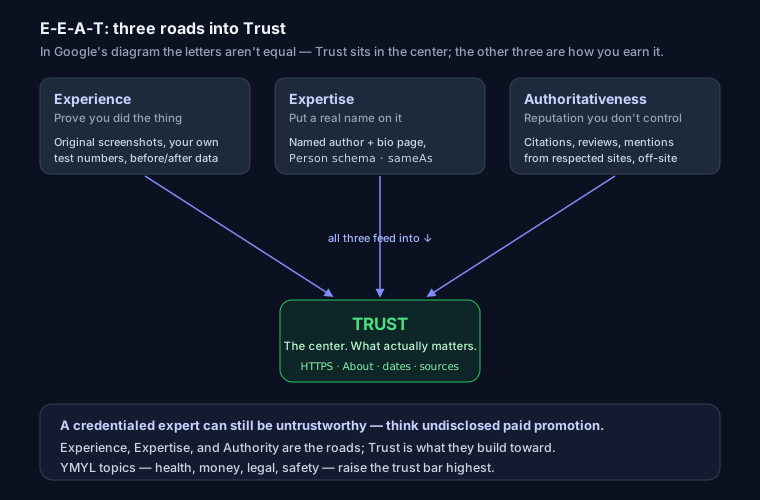
One detail people miss: in Google's own diagram, the four letters aren't equal. Trust sits in the center. Experience, Expertise, and Authoritativeness are the roads that feed into Trust. A page can be written by a credentialed expert and still be untrustworthy (think a doctor writing paid, undisclosed promotion). Trust is the thing that actually matters; the other three are how you earn it.
Why it matters more than it used to
Google's Helpful Content system, rolled out and then folded into the core algorithm across 2022–2024, is built to reward "people-first" content and demote content made mainly to rank. Sites that were thin on authorship, contact details, and trust indicators — content farms, faceless affiliate sites — saw real drops. This hits YMYL ("Your Money or Your Life") topics hardest: health, finance, legal, safety, news. On those queries Google sets the trust bar much higher, because bad advice can cost someone their money or their health. A recipe blog gets more slack than a page about drug interactions.
Turning the pillars into signals you can actually implement
The abstract advice ("build authority") is useless on its own. Here's what each pillar looks like as something a developer or site owner can ship this week.
Experience — prove you did the thing
First-hand experience shows up in the content, not the metadata. Original screenshots (not stock, not vendor press images), your own test results, real numbers from a job you ran, before/after data, a photo of the actual product on your desk. Write "I ran this migration on a 40k-page site and INP dropped from 340ms to 180ms," not "experts recommend improving INP." Raters are explicitly told to look for signs the author has actually used the product or visited the place. If your page could have been written by someone who never touched the subject, that's the gap to close. This is also where genuine content depth in SEO comes from — depth is a byproduct of real experience, not word count.
Expertise — put a real name on it
- Real author bylines, not "Admin" or "Staff Writer."
- Each byline links to a detailed author page: bio, credentials, what they've built, other articles they've written.
- Mark that author up with Person schema and use
sameAsto point at their LinkedIn, ORCID, GitHub, or professional profile. That's how you connect a name on your site to an identity Google already trusts elsewhere.
{
  "@context": "https://schema.org",
  "@type": "Person",
  "name": "Dr. Jane Okafor",
  "jobTitle": "Registered Dietitian",
  "url": "https://example.com/authors/jane-okafor",
  "sameAs": [
    "https://www.linkedin.com/in/janeokafor",
    "https://orcid.org/0000-0002-1825-0097"
  ]
}
Then reference that author from your Article schema, and add Organization schema for the site itself. If you're not comfortable hand-writing JSON-LD, the schema generator builds valid Person and Organization blocks, and the deeper mechanics are in how to add JSON-LD structured data.
Authoritativeness — reputation you don't control
Authority is mostly off-site, and here's the uncomfortable part: what other people say about you matters more than what you say about yourself. Raters are instructed to research a site's reputation using independent sources — reviews, references in industry publications, mentions on forums, links from respected sites. You can put "trusted by millions" in your footer; a rater will ignore it and read what actual customers wrote elsewhere. Earn real citations, get referenced by people in your field, respond to reviews. There's no schema tag for this.
Trustworthiness — the checkable foundation
This is the most fixable pillar, and it's the center of the diagram, so it's where to start:
- HTTPS everywhere, valid cert, no mixed content. Also worth hardening your response headers — see security headers every website needs.
- Published + updated dates on every article, exposed as both a visible
<time>element anddatePublished/dateModifiedin schema. - An About page with real people — names, faces, roles. Not a stock-photo team.
- Visible contact info: a real email or contact form, and for a business, physical address and legal/company details.
- Citations to primary sources — link claims to the actual study, the official docs, the .gov/.edu page, not to another blog that summarized it.
- Privacy policy and terms, linked in the footer.
Quick audit checklist
Run down this list against any page you care about:
- Every article has a real, named author with a byline
- Author name links to a bio page with credentials +
sameAslinks - Person + Organization + Article schema present and valid
- About page names real people
- Contact info and (for businesses) legal/physical details are visible
- Published and updated dates shown and in schema
- Claims cite primary sources
- HTTPS with no mixed-content warnings
- Privacy policy and terms linked
- You've searched your own brand and read what third parties say
The mechanical half of that list — author info, About page, privacy policy, contact details, published dates — is exactly what the SEO Snapshot analyzer detects automatically. Point it at a URL and it flags which trust signals are missing before you go hunting by hand. If you want a broader picture of where a page stands, what a good SEO score looks like puts these trust checks in context with the rest of your technical health.
FAQ
Is E-E-A-T a ranking factor? Not literally — there's no E-E-A-T score in the ranking systems. It's the standard human raters use to judge whether algorithm changes are surfacing trustworthy content, so Google tunes toward it. In practice, improving E-E-A-T and improving rankings pull in the same direction.
Does it matter for a small hobby site? Yes, but proportionally. The bar is highest for YMYL topics (health, money, legal, safety). A hobby or entertainment site has more room, but real authorship and basic trust signals still help it compete.
Which fix gives the fastest return? The trust basics — visible contact info, an About page with real people, author bylines, published/updated dates, and HTTPS — can go live today. Authoritativeness and reputation are earned over months and can't be shortcut with markup.
Can schema alone fix weak E-E-A-T? No. Person and Organization schema help Google understand your signals, but they don't manufacture trust. If the underlying content shows no real experience and no one off-site vouches for you, clean markup won't rescue it.