What a Redirect Chain Is
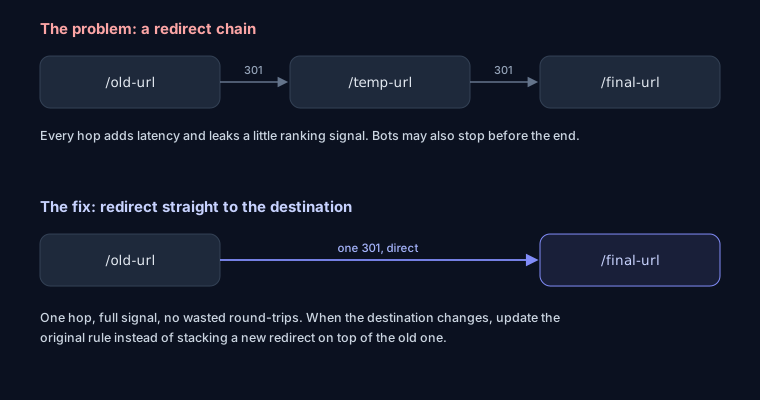
A redirect chain is when a URL redirects to another URL that redirects again before finally landing on the real page: /old-url → /temp-url → /final-url. Each step is a separate round-trip. Chains build up quietly over years — a page moves, then the new location moves again, and nobody updates the first rule.
Why Chains Hurt
- Latency. Every hop is a full request/response round-trip. On mobile, three hops can add hundreds of milliseconds before the page even starts loading — a real page-speed and user-experience cost.
- Leaked signal. A single 301 passes essentially all ranking equity. Stack several and you risk small losses at each step, and Google may consolidate less cleanly.
- Crawl waste. Googlebot spends crawl budget following hops instead of crawling real pages. On large sites this adds up.
- Bots that give up. Some crawlers and clients stop after a few hops. If your chain is long, the destination may never be reached.
How to Find Them
Check the redirect chain for any URL with the HTTP header checker — it follows every hop and shows the full path with status codes, so you can see exactly where a chain forms.
How to Fix Them
Point the first URL directly at the final destination, and remove the middle hops:
- Update the original redirect rule so
/old-urlgoes to/final-urlin one step. - When a destination changes again, edit the existing rule rather than adding a new redirect on top of it.
- Do the same for the common site-wide redirects (http→https, www→non-www): make sure they resolve in a single hop, not http→https→www in sequence.
Generate clean, single-hop rules with the redirect generator for Apache and Nginx, or the Vercel and Netlify versions.
FAQ
Q: How many redirects in a chain is too many? Aim for one. Google can follow a few hops, but every extra hop costs latency and crawl budget and risks signal loss. Two is tolerable in a pinch; three or more should always be collapsed.
Q: Do redirect chains directly lower rankings? Not as a direct penalty, but they slow the page, waste crawl budget, and can dilute the ranking signal that a clean single 301 would pass fully — all of which work against you.
Q: How do I see the full chain for a URL? Use a checker that follows every hop and lists the status codes, like the HTTP header checker. Fix any URL that shows more than one redirect before a 200.